

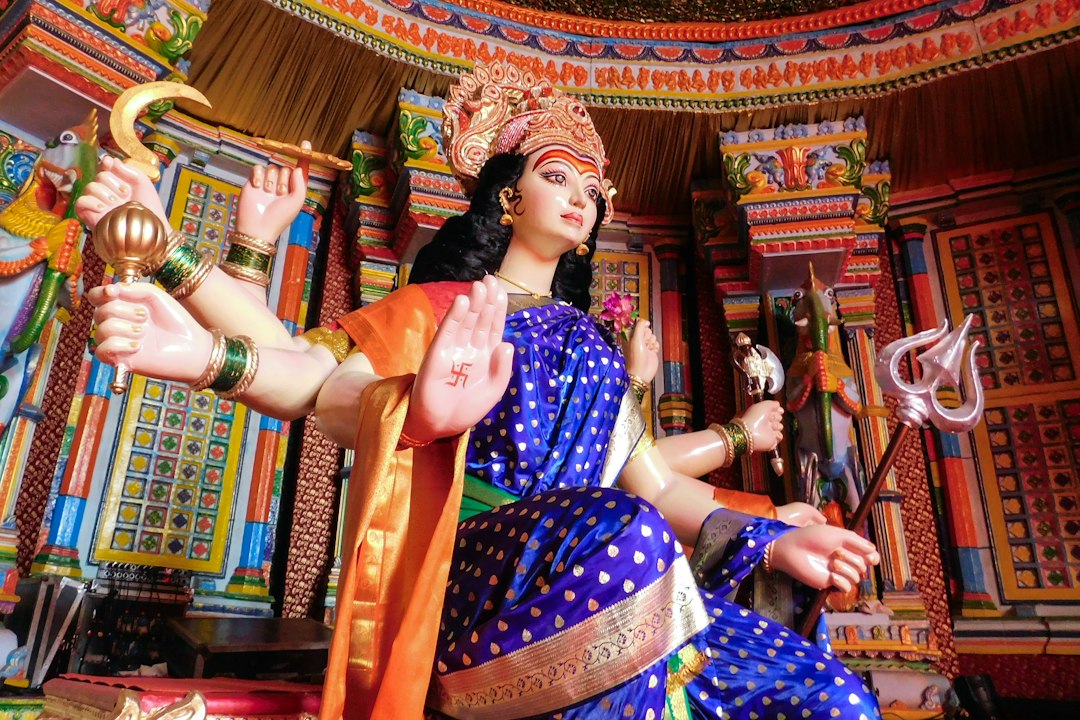
Navratri in Ayodhya: Fasting, Feasting, and Devotion

As the first cool breeze of autumn settles over the Sarayu, Ayodhya begins its slow transformation into something luminous. Navratri, the nine nights honouring the divine feminine, arrives here with a particular tenderness — this is, after all, a city that has always understood devotion as a daily practice rather than an occasional performance. For the guests who stay with us during these nine days, we often find ourselves less like hosts and more like companions, walking them through a festival that reveals itself slowly, in fasting tables and temple courtyards, in marigold garlands and the murmur of evening aarti.
The Rhythm of the Nine Nights
Navratri in Ayodhya does not announce itself with spectacle so much as it settles into the bones of the city. Each of the nine nights is dedicated to a different form of the goddess, and households across the old town quietly rearrange their routines around prayer, fasting, and small rituals passed down through generations. There is a gentleness to how it unfolds here compared to the more theatrical celebrations elsewhere in the country — Ayodhya’s Navratri feels intimate, almost domestic, even as it draws pilgrims from across Uttar Pradesh and beyond. Visitors curious about how this rhythm compares to the city’s other major observances will find useful context in how locals observe and celebrate major Ayodhya festivals, which captures the unhurried, deeply personal character that defines festival life in this part of the country.
For us, the days build in a particular way. Mornings begin early, with the temple bells arriving before the sun properly does. By evening, the ghats along the Sarayu fill gradually, not with crowds exactly, but with families and pilgrims moving toward the water in a kind of unspoken choreography that has been repeated for centuries.
Fasting as a Form of Attention
Navratri fasting in Ayodhya is less about restriction and more about attentiveness — a deliberate slowing down of appetite so that the mind has room for something else. Many observers eat only once a day, choosing simple preparations of sabudana, kuttu flour, or fresh fruit, while others abstain from grain entirely for the full nine days. What strikes visitors most is how unforced it all feels. Kitchens across the city adapt without complaint, and even establishments that don’t typically cater to strict dietary practices will quietly shift their offerings for the season.
We take particular care with this ourselves, working closely with local cooks who understand the nuance between what is merely vegetarian and what is properly satvik — free of onion, garlic, and anything considered tamasic. Guests wanting to explore this style of eating beyond the festival itself often appreciate the broader picture offered in healthy and satvik dining options in Ayodhya, since the principles that guide Navratri cooking here are really an intensified version of a philosophy the city practices year-round.
Feasting on the Ninth Night
If fasting defines the body of Navratri, feasting is its release. On Ashtami and Navami, the final two days, kitchens across Ayodhya come alive with the preparation of halwa, puri, and kala chana, dishes offered first to young girls invited into homes as living representations of the goddess before being shared more widely. This ritual, known as Kanjak or Kanya Pujan, is one of the most moving parts of the entire festival — there’s something quietly profound about watching a household honour divinity not through grand gesture but through the simple act of feeding children with care.
By the time Navami arrives, the city’s restraint gives way to genuine celebration. Sweet shops that spent nine days serving fasting-friendly fare suddenly overflow with an abundance of festive mithai, and the streets carry the smell of ghee and roasting spices well into the night. It’s a shift worth witnessing in person, and one that pairs naturally with an early walk the next morning — for those inclined, the best routes for a morning run or walk in Ayodhya offers a lovely way to see the city recovering its ordinary calm after a night of feasting.
Temples, Processions, and the Pull of Devotion
No account of Navratri here would be complete without mentioning the temples themselves, which take on an almost otherworldly quality during these nine nights. Devi temples across the city are draped in red and gold, their courtyards lit by oil lamps that burn steadily until dawn. Processions wind through narrow lanes, accompanied by the rhythmic clang of cymbals and the deep resonance of conch shells, while devotees carry small clay lamps as offerings.
Ayodhya’s spiritual geography is, of course, deeply layered — a city shaped as much by ancient legend as by present-day devotion, something explored thoughtfully in ancient legends behind Ayodhya’s sacred sites. During Navratri, that layered history feels especially close to the surface; the goddess worship of these nine nights sits alongside the Ram-centric devotion the city is best known for, reminding visitors that Ayodhya’s sacredness has always been plural rather than singular. The Incredible India tourism portal offers a helpful primer on Navratri’s pan-national significance for those encountering the festival for the first time, though nothing quite substitutes for standing in a torch-lit courtyard here and feeling the age of the ritual settle over you.
A City Built for This Kind of Devotion
Part of what makes Navratri in Ayodhya so affecting is the sheer infrastructure of faith that surrounds it — a city that has spent recent years investing seriously in its capacity to host pilgrims with dignity and ease. The improvements documented in recent infrastructure developments and progress in Ayodhya have made a genuine difference during high-footfall periods like this one, easing what used to be considerable congestion around the ghats and major temples. The Uttar Pradesh Tourism department has been similarly attentive, coordinating with local authorities to ensure the festival remains as much a spiritual experience as a manageable one, even as visitor numbers continue to grow year on year.
For travellers arriving from farther afield, this matters enormously. The city’s improved connectivity, paired with clearer signage and better-managed crowd flow at major sites, means Navratri no longer demands the kind of endurance it once did. It has become, instead, an experience one can actually settle into and savour.
Staying Present Through the Nine Nights
We’ve learned over successive Navratris that the guests who get the most out of this festival are the ones who resist the urge to rush through it. Ayodhya rewards a slower pace during these nine days — lingering at a temple longer than planned, accepting a plate of prasad from a stranger, sitting by the Sarayu as the evening aarti begins without checking the time. There is a stillness underneath all the devotional activity, and it tends to reveal itself only to those willing to stay a while.
Each evening, as the last lamps are lit along the ghats and the sound of bhajans drifts back through the lanes toward the hotel, we’re reminded why we chose to build a home for travellers in this particular city. Navratri doesn’t ask much of its observers beyond sincerity, and there is something quietly restorative about spending nine nights in a place that still remembers how to practice that.
Photo by Sonika Agarwal on Unsplash
Discover more from Ayodhya Journal
Subscribe to get the latest posts sent to your email.