

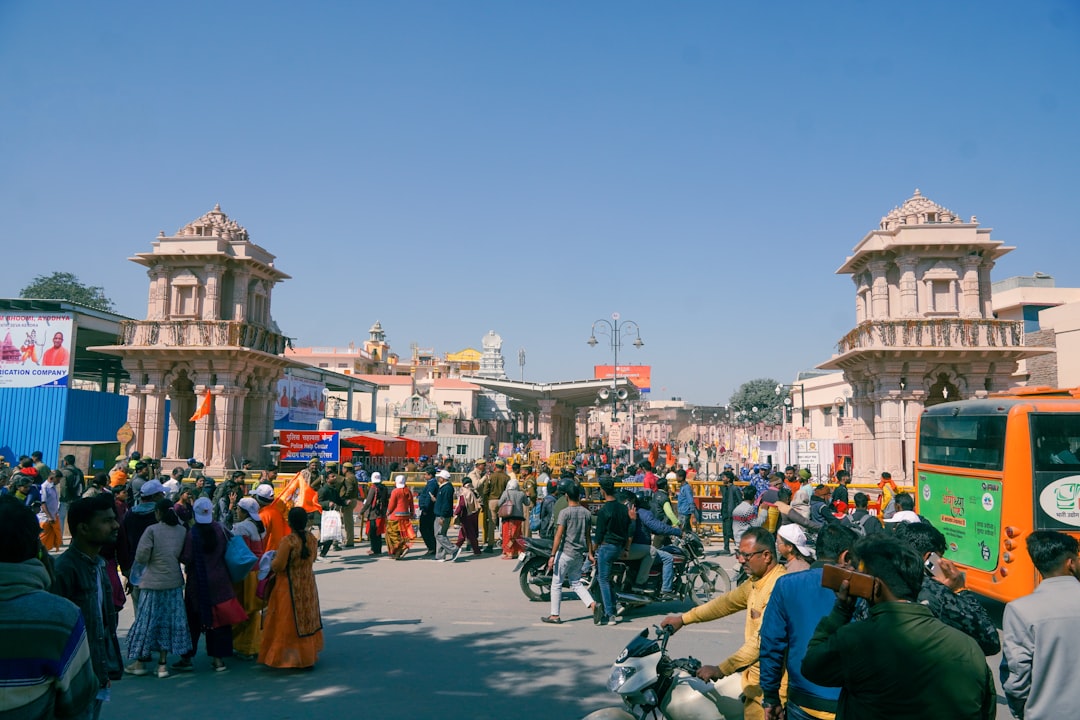
Ancient Legends Behind Ayodhya’s Sacred Sites

The Eternal City Where Myth Meets Reality
Ayodhya holds a unique place in the human imagination—a city where ancient legend and spiritual devotion have shaped the landscape for millennia. Nestled along the banks of the Sarayu River in Uttar Pradesh, this sacred site represents far more than a destination on a map. It is a living testament to faith, a repository of stories that have captivated hearts across generations, and a place where visitors can sense the profound spirituality that has defined Indian civilization for thousands of years.
For those seeking to understand India’s soul, Ayodhya offers an unparalleled opportunity. The city’s significance transcends religious boundaries—it speaks to the universal human need to connect with something greater than ourselves, to understand our place within narratives that span centuries. Walking through Ayodhya’s streets, one cannot help but feel the weight of history and the vibrant energy of living tradition simultaneously.
The Birthplace of Ram: Understanding the Ramayana’s Heart
At the very core of Ayodhya’s spiritual identity lies the legend of Ram, the seventh avatar of Vishnu in Hindu tradition. According to the Ramayana, one of the world’s most ancient and revered epics, Ram was born in Ayodhya during a time when the city flourished as the capital of a great kingdom. This narrative has resonated so deeply within Indian culture that it has influenced art, literature, philosophy, and daily practices for over two thousand years.
The Ramayana, attributed to the sage Valmiki, presents Ram not merely as a divine being but as an ideal human—embodying dharma (righteousness), filial duty, courage, and compassion. His story, spanning fourteen years of exile, his rescue of his beloved wife Sita from the demon king Ravan, and his eventual return to reclaim his kingdom, contains profound moral and philosophical teachings that continue to guide millions.
Visitors to Ayodhya often find themselves deeply moved by contemplating these ancient narratives. There is something profoundly moving about standing in a place so intimately connected to stories that have shaped civilizations. The legends here are not distant historical artifacts—they remain alive in the consciousness of pilgrims and visitors who come seeking connection to something timeless.
The Sacred Temples: Architectural Expressions of Devotion
Ayodhya’s landscape is punctuated by temples of varying ages and architectural styles, each telling its own story within the larger narrative of the city. The recently consecrated Ram Mandir stands as a magnificent modern expression of centuries-old devotion, its intricate carvings and towering spires visible from many points across the city. This temple represents not only religious significance but also an architectural achievement that honors traditional craftsmanship while incorporating contemporary sensibilities.
Beyond the main temple, numerous smaller shrines dot the city, each dedicated to different aspects of Ram’s life and legend. Kanak Bhavan is believed to be the place where Ram and Sita were given gifts of gold by the king. Janaki Mandir, dedicated to Sita, stands as a testament to the feminine divine principle revered across Hindu philosophy. These sites are not merely places of worship—they are repositories of art, history, and the accumulated spiritual aspirations of countless devotees.
The architectural styles visible across Ayodhya’s temples reflect different periods of Indian history. Some structures bear the influences of the Mughal era, while others showcase the distinctive features of regional North Indian temple architecture. Walking among these temples, one becomes aware of how religious devotion has continuously reinvented its physical expressions while maintaining spiritual continuity.
Pilgrimage and the Power of Sacred Waters
The Sarayu River holds profound significance in Ayodhya’s spiritual geography. In Hindu tradition, the Sarayu is considered sacred, and ritual bathing in its waters is believed to purify the soul and wash away karmic burdens. The river’s banks have witnessed millions of pilgrims performing these rituals across centuries, creating an atmosphere thick with spiritual intention.
The practice of pilgrimage itself carries deep meaning in Indian spirituality. It represents not merely a physical journey but an inner transformation—a willingness to step away from the ordinary world and open oneself to experiences that transcend daily consciousness. Pilgrims to Ayodhya come seeking blessings, spiritual insight, or simply to feel connected to something greater than their individual lives.
The river’s role in Ayodhya extends beyond religious ritual. It has shaped the city’s geography, economy, and daily life for millennia. The Sarayu’s presence reminds visitors that sacred sites are not abstractions—they are embedded within natural landscapes that continue to sustain and nourish the communities that revere them.
Living Traditions: The Spiritual Culture That Endures
What distinguishes Ayodhya from archaeological sites or historical museums is that it remains a living center of spiritual practice. The city pulses with devotional energy, particularly during festivals and holy occasions. Diwali, celebrated as Ram’s return from exile, transforms Ayodhya into a spectacular display of lights and collective joy. Ram Navami, marking Ram’s birthday, draws devotees from across India and beyond, creating a celebratory atmosphere infused with religious fervor and community spirit.
The daily rhythms of Ayodhya are structured around spiritual practices. Early mornings echo with the chanting of prayers and the ringing of temple bells. Evening aarti (prayer ceremonies) draw crowds of devotees and curious visitors. These living traditions are not performances for tourists—they represent genuine spiritual practice that has continued, with remarkable continuity, across generations.
For visitors, witnessing these traditions offers insights that no guidebook can adequately capture. The devotion visible in a devotee’s face during prayer, the communal sharing of blessed food (prasad), the collective singing of devotional songs—these moments reveal the profound ways that spirituality integrates into daily life and community identity in India.
Visiting Ayodhya: A Journey Beyond Conventional Tourism
A visit to Ayodhya differs fundamentally from typical tourism experiences. This is a place that asks something of visitors—not necessarily in terms of religious conversion or belief, but in terms of openness to experiences that transcend the material and mundane. Coming to Ayodhya with respect for its spiritual significance and a genuine desire to understand rather than merely to observe creates a richer, more meaningful experience.
The best time to visit depends on what you seek. If you wish to experience the city’s spiritual intensity and festive atmosphere, timing your visit with major festivals offers an unforgettable experience. However, quieter seasons offer their own rewards—the opportunity to sit in contemplation, to speak with pilgrims and priests, to absorb the city’s spiritual essence without the intensity of crowds.
A thoughtful approach to visiting Ayodhya involves seeking out knowledgeable local guides who can explain not just the historical facts but the cultural significance and spiritual meaning embedded within sites. Speaking with priests, monks, and long-time residents enriches understanding beyond what any external observation alone could provide.
Conclusion: The Timeless Invitation
Ayodhya invites us to reconnect with dimensions of human experience that modern life often marginalizes—the spiritual, the mythological, the communal, and the transcendent. Whether one approaches these ancient legends as religious truth, as cultural heritage, or as fascinating expressions of human creativity and meaning-making, Ayodhya offers something rare: a place where past and present coexist, where millions of individual spiritual journeys intersect within a shared landscape of devotion.
Standing in Ayodhya, one understands why this city has captivated human imagination for millennia. The legends may be ancient, but the yearning they express—for meaning, for goodness, for connection to something eternal—remains as vital today as it was thousands of years ago. In visiting this sacred city, guests do not merely observe history; they become participants in a tradition of seeking that connects them to countless others across time.
Photo by Raju Kumar on Unsplash
Discover more from Ayodhya Journal
Subscribe to get the latest posts sent to your email.