

A Guide to the Annual Ram Vivah Panchami Celebrations

As winter settles gently over the sacred city, a particular kind of anticipation begins to stir in Ayodhya’s lanes and temple courtyards. Ram Vivah Panchami, the celebration commemorating the divine wedding of Lord Rama and Goddess Sita, transforms the city into a living tableau of devotion, colour, and ceremony. For guests staying with us during this period, the festival offers something rare: a chance to witness ritual tradition not as a staged performance, but as it has unfolded for generations among the people who call this city home.
The Story Behind the Celebration
Ram Vivah Panchami falls on the fifth day of the bright fortnight in the Hindu month of Margashirsha, marking the day Rama and Sita were wed in Janakpur according to the Ramayana. While the event itself is said to have taken place many miles from Ayodhya, the city treats the occasion as deeply its own, given its position as Rama’s birthplace and eternal home. Processions, recitations, and reenactments across the city draw on this enduring connection, and for anyone keen to understand how thoroughly the epic is woven into the physical and cultural fabric of the region, it is worth spending an afternoon tracing the Ramayana’s connections throughout Ayodhya’s landscape before the festivities begin. Seeing the temples and riverbanks associated with these stories lends extra resonance to the wedding ceremonies that follow.
The festival is as much about social memory as it is about scripture. Families gather, communities organise processions, and temples large and small host their own versions of the wedding ritual, each inflected with local custom. It is a celebration that belongs to everyone, from the priests who conduct elaborate Vedic ceremonies to the children dressed as the divine couple in neighbourhood pageants.
What to Expect: Processions, Rituals, and Temple Ceremonies
The heart of Ram Vivah Panchami lies in its processions. Elaborately decorated chariots and palanquins carry idols of Rama and Sita through the city’s main thoroughfares, accompanied by musicians, chanting devotees, and showers of flower petals. Hanuman Garhi and the area around the Ram Janmabhoomi complex see some of the largest gatherings, with devotees arriving well before dawn to secure a good vantage point.
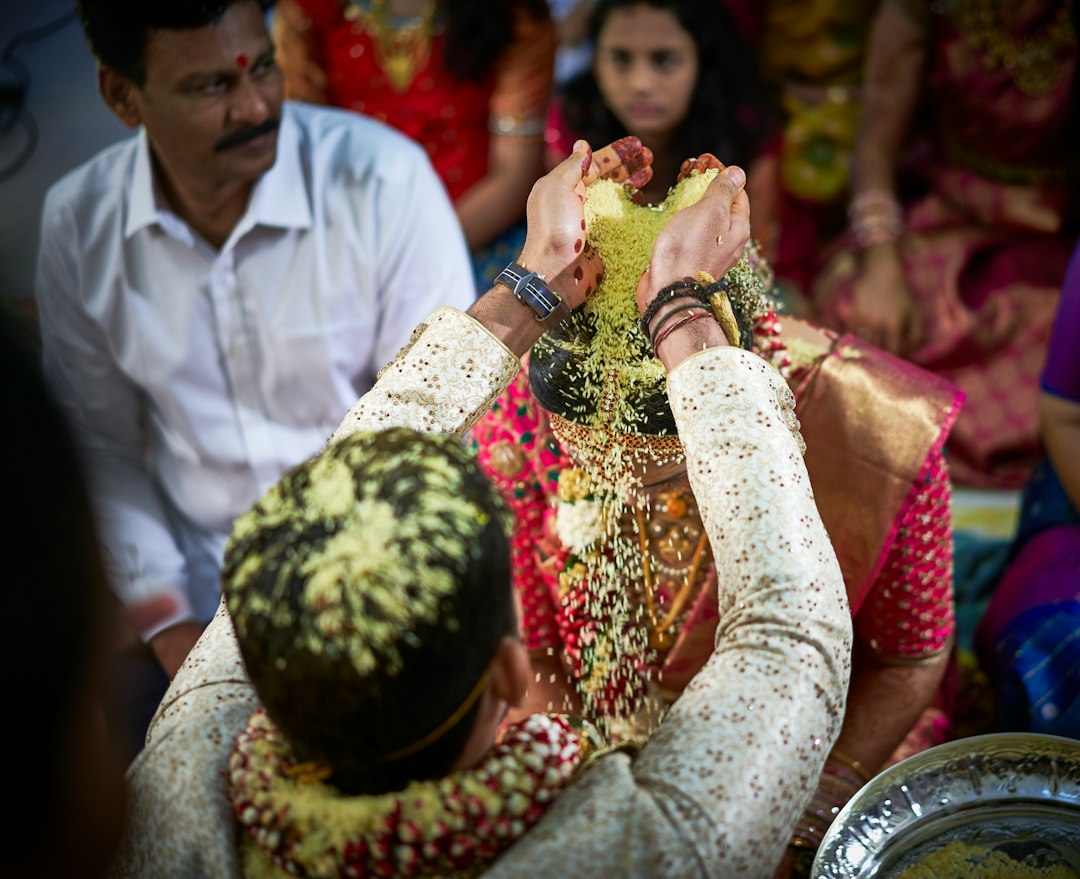
Inside the temples themselves, priests conduct the wedding rites in painstaking detail, mirroring traditional Hindu marriage ceremonies step by step: the exchange of garlands, the recitation of mantras, the ceremonial saat phere. Many temples welcome visitors to observe these rituals, and the atmosphere inside is hushed and reverent even as the crowds outside swell with celebration. If you have an interest in classical ritual and liturgy, this is one of the few times of year when such ceremonies are performed with this level of completeness and public visibility.
Evenings bring a softer kind of spectacle, as oil lamps are lit along the ghats and devotional songs drift across the water. The Archaeological Survey of India has long maintained several of the historic sites that serve as backdrops to these celebrations, and visiting during the festival offers a chance to see these monuments animated by the very traditions they were built to honour, a detail noted by the Archaeological Survey of India in its documentation of the region’s heritage sites.
Navigating the Crowds with Ease
Ram Vivah Panchami draws considerable numbers of pilgrims and visitors, and the city’s rhythms shift accordingly. Roads near the main temple complexes become pedestrian-dense from early morning, and private vehicle access is often restricted during peak procession hours. We generally advise guests to plan ahead, and app-based transport has made this considerably easier in recent years; those relying on ride-hailing services like Uber and Rapido should expect longer wait times near the festival routes and build in extra buffer when scheduling pickups.
For guests travelling in from further afield, it’s worth noting that the city’s transport infrastructure has expanded considerably to handle festival-season volume. The recent improvements to the local bus stand have made regional travel smoother, and those flying in can find helpful route and terminal information for Maharishi Valmiki Airport useful when timing arrivals around the festival’s busiest days. We’re always happy to help guests coordinate transport on either end, particularly for early morning temple visits when the processions are at their most atmospheric.
A Quieter Side of the Festival
While the main processions command attention, some of our favourite moments during Ram Vivah Panchami happen in the quieter corners of the city. Small neighbourhood temples hold their own modest ceremonies, often with a warmth and intimacy that the larger gatherings can’t quite replicate. Wandering slightly off the main festival routes, particularly in the late afternoon before the evening processions begin, reveals a gentler, more contemplative side of the celebration.
This is also an excellent time to pause for a meal that reflects the spirit of the occasion. Ayodhya’s satvik dining options, which emphasise pure, vegetarian cooking without onion or garlic, feel especially fitting during a festival centred on devotion and ritual purity, and we’d point curious guests toward a guide to the city’s satvik dining options for recommendations beyond our own kitchen. Alternatively, the city’s newer wave of thoughtful cafés offers a pleasant counterpoint to a day of temple visits; we’ve written before about how Ayodhya’s growing café culture blends quiet, contemplative spaces with genuinely good coffee, which can be a welcome rest between the morning and evening ceremonies.
Planning Your Stay Around the Festival
Because Ram Vivah Panchami is one of Ayodhya’s most significant annual observances, accommodation across the city fills quickly in the days surrounding the festival. We’d gently suggest booking well in advance if this is the reason for your visit, and building some flexibility into your itinerary, since processions and temple schedules can shift slightly depending on local coordination each year. The Uttar Pradesh Tourism department typically publishes updated event timings closer to the date, and checking the official Uttar Pradesh Tourism calendar before you travel is a sensible way to confirm specific processional routes and ceremony hours.
For travellers with mobility considerations, including older guests who may find large crowds challenging to navigate, it’s worth reviewing some practical guidance on accessibility in Ayodhya before finalising plans, as certain vantage points and temple entrances are considerably easier to access than others during peak festival hours. Our concierge team is also glad to help arrange quieter viewing spots or alternative timings for those who prefer to experience the festival’s atmosphere without joining the densest crowds.
There’s something quietly moving about witnessing a festival that has been observed, in one form or another, for centuries, carried forward not by spectacle alone but by genuine continuity of belief. Whether you find yourself swept into the energy of a procession or seated quietly at the edge of a smaller temple courtyard, we hope Ram Vivah Panchami gives you a glimpse of Ayodhya at its most heartfelt, and we’re honoured whenever our guests choose to experience it with us.
Photo by Ashwini Chaudhary(Monty) on Unsplash
Discover more from Ayodhya Journal
Subscribe to get the latest posts sent to your email.