

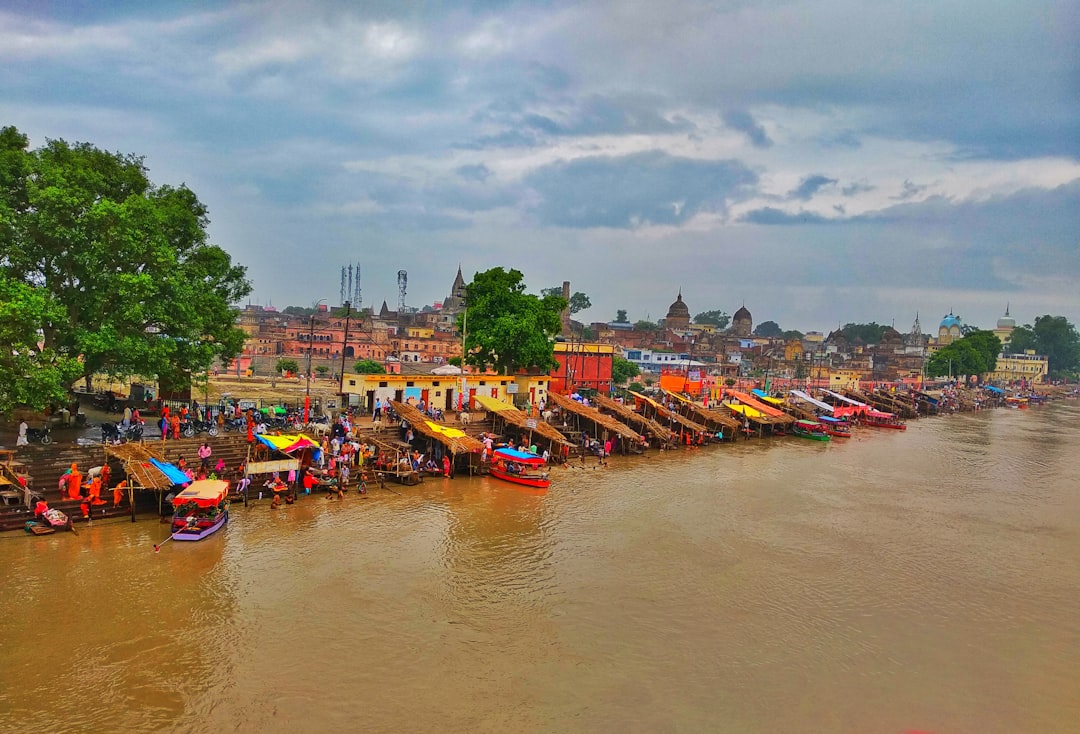
Community Stories: The People Shaping Ayodhya’s Future

Weaving New Dreams: Ayodhya’s Artisans and Their Renaissance
Walk through the lanes near Naya Bazaar on an early morning, and you’ll encounter Ramesh Kumar, a third-generation woodcarver whose hands move with the precision of a surgeon. His workshop, tucked into a modest corner, is alive with the scent of sandalwood shavings and the rhythmic tap of his chisel. Ramesh represents something quietly remarkable happening across Ayodhya—a revival of skills that were nearly lost to time. The revival of Ayodhya’s handicraft industry is not merely an economic story; it’s a deeply personal one, woven from the determination of people like Ramesh who refused to let their heritage fade.
For decades, traditional craftspeople in Ayodhya watched their livelihoods diminish as mass production and migration pulled younger generations toward cities. But something shifted in recent years. Increased tourism, renewed interest in heritage crafts, and dedicated support from community organizations have created new pathways. Ramesh now trains five young apprentices in his workshop, each learning the intricate techniques required to carve temple motifs and decorative panels. “My father taught me, I teach them,” he says simply, yet the pride in his voice speaks volumes about continuity and purpose.
Beyond woodcarving, Ayodhya’s weavers, stone sculptors, and embroidery artisans are experiencing their own awakenings. These are people with names and families, dreams and vulnerabilities—individuals who understand that their work carries the soul of Ayodhya itself. When travelers choose to support local craftspeople rather than seek mass-produced souvenirs, they become part of this quiet revolution, directly enabling families to remain rooted in their ancestral professions.
The Hospitality Pioneers: Building Connection Through Welcome
Priya Sharma arrived in Ayodhya seven years ago with an audacious vision: to create boutique accommodations that honored both the city’s spiritual essence and the desires of modern travelers. The hospitality boom in Ayodhya has presented both opportunity and challenge, and entrepreneurs like Priya are navigating this transformation thoughtfully. Her small hotel doesn’t merely offer rooms; it offers relationships. She knows regulars by name, remembers their preferences, and has become an informal guide to the city’s true character.
Priya’s team includes housekeeping staff who have worked with her since opening day, front desk associates fluent in four languages, and a kitchen led by a chef committed to preparing authentic satvik meals. These aren’t just employees on a payroll—they’re collaborators in a mission to redefine what hospitality means in a pilgrimage city. “Every guest who stays with us carries our reputation forward,” Priya often tells her team. This philosophy, rooted in personal accountability, shapes every interaction.
The growth Priya and her peers have witnessed mirrors a larger transformation. Ayodhya is no longer a destination people rush through; it’s becoming a place where travelers linger, explore, and develop genuine connections. This shift has created employment for hundreds—and not just in hotels. Guides, transportation providers, restaurant staff, and maintenance workers have all benefited from the sustained interest in the city. Yet these economic gains matter most to the individuals behind them: the single mother who now works as a hotel manager, the young man who directs traffic near pilgrimage sites, the cook whose salary supports his children’s education.
Spiritual Guides: Keepers of Ancient Narratives
Meet Pandit Mahesh Mishra, who has dedicated nearly forty years to studying and sharing Ayodhya’s spiritual heritage. His knowledge of the ancient legends behind Ayodhya’s sacred sites extends beyond textual learning—it’s embodied, lived, and transmitted through countless conversations with seekers and travelers. Pandit Mahesh is one of several respected guides whose work shapes how visitors understand the city’s profound spiritual landscape.
What makes Pandit Mahesh and his colleagues invaluable is their ability to bridge worlds. They translate not merely language, but meaning. When they explain the significance of a particular ritual or the layers of history embedded in a temple’s architecture, they’re doing more than providing information—they’re facilitating genuine encounters with something transcendent. Many visitors report that these conversations became the most memorable part of their journey, precisely because they felt witnessed by someone truly invested in their understanding.
The role of spiritual guides has evolved significantly in recent years, particularly with the increased pilgrim traffic. These individuals navigate the challenge of remaining authentic while serving a growing and increasingly diverse audience. Some, like Pandit Mahesh, have adapted by offering varied experiences—detailed scholarly sessions for academics, simpler explanations for families with young children, and meditative walks for those seeking contemplative connection. This flexibility requires both intelligence and compassion.
Community Educators and Social Workers: The Backbone of Change
Beneath the visible transformation of Ayodhya’s streets and services are people working in less glamorous but equally vital spaces. Anaya Devi runs a small learning center for children from marginalized communities, teaching everything from basic literacy to digital skills. She’s one of dozens of educators and social workers ensuring that Ayodhya’s growth doesn’t leave vulnerable populations behind. “Tourism brings opportunity,” she explains, “but only if people have the skills and education to access it.”
Anaya’s work has become more urgent and more possible simultaneously. As the city attracts resources and attention, organizations like hers have gained greater visibility and funding access. Yet the challenges remain substantial. She works with families who struggle to balance immediate survival needs with long-term educational goals. Several of her students have gone on to find employment in hotels, restaurants, and tourism services—proof that investment in education creates genuine pathways upward.
These educators operate with a quiet determination often invisible to visitors passing through. They’re the ones who ensure that Ayodhya’s renaissance becomes truly inclusive, that economic growth translates into improved lives across all communities. Their work requires both idealism and pragmatism, and individuals like Anaya embody both in abundance.
The Festival Keepers: Preserving Celebration and Continuity
Each year, as major festivals approach, Ayodhya’s rhythms transform. These celebrations are stewarded by individuals like Suresh Nath, an elder who coordinates community preparations for major observances. The way locals observe and celebrate major Ayodhya festivals reflects not religious performance but genuine communal life, and keepers like Suresh ensure authenticity isn’t lost amid commercialization.
Suresh works with temple committees, local merchants, and volunteer networks to coordinate everything from ritual preparations to crowd management. His role demands knowledge spanning religious protocol, logistics, safety, and human psychology. During Ram Navami or Diwali, thousands descend upon the city, and Suresh’s careful orchestration ensures the experience remains spiritually meaningful rather than merely chaotic. He’s trained dozens of coordinators in his approach, creating a network of people committed to sustaining authentic celebration.
What’s particularly moving about Suresh’s work is his explicit intention to involve young people. He ensures that festival traditions are taught, not simply performed. By bringing teenagers into preparation processes, he guarantees that knowledge, values, and practices will survive another generation. These youth volunteers don’t earn salaries—they participate because they’ve been drawn into something larger than themselves, something Suresh has carefully cultivated as genuinely meaningful.
The Unofficial Historians: Memory Keepers of a Transforming City
In a modest shop filled with old photographs, documents, and artifacts, Vikram Singh works on a project he calls “Ayodhya’s Living Archive.” A retired schoolteacher, Vikram has spent the last decade collecting stories, photographs, and oral histories from longtime residents. His work ensures that as Ayodhya transforms rapidly, the texture of what came before remains accessible and honored.
Vikram’s interviews reveal intimate details of daily life across decades—how monsoons were managed, what festivals felt like in smaller gatherings, the evolution of family businesses, the quiet joys and struggles of ordinary lives. This isn’t academic history; it’s the lived experience of real people. By documenting these narratives, Vikram performs a service to the community itself: affirming that their stories matter, that their contributions deserve remembrance.
Increasingly, visitors seek out Vikram’s archive, recognizing in these stories something authentic and human that no guidebook can provide. His work demonstrates that heritage isn’t confined to temples and ancient sites—it lives in the memories and experiences of the people who inhabit a place.
A City Held in Human Hands
Ayodhya’s transformation cannot be understood through statistics alone. Behind every development, every improved service, every preserved tradition are individuals making conscious choices about what matters and how to act with integrity. Ramesh protecting his carving tradition, Priya building authentic hospitality, Pandit Mahesh transmitting spiritual knowledge, Anaya ensuring inclusive education, Suresh stewarding authentic celebration, and Vikram preserving memory—each represents a different facet of what’s possible when people commit to their communities with genuine care.
When you experience Ayodhya, whether as a pilgrim seeking spiritual connection or a traveler curious about a transforming city, you’re encountering the accumulated effort, wisdom, and love of countless individuals. That encounter, at its best, becomes reciprocal—your presence and respect affirms their dedication, creating a virtuous circle of mutual regard. These are the people truly shaping Ayodhya’s future, and they deserve to be known and honored for their work.
Photo by Ayush Srivastava on Unsplash
Discover more from Ayodhya Journal
Subscribe to get the latest posts sent to your email.